

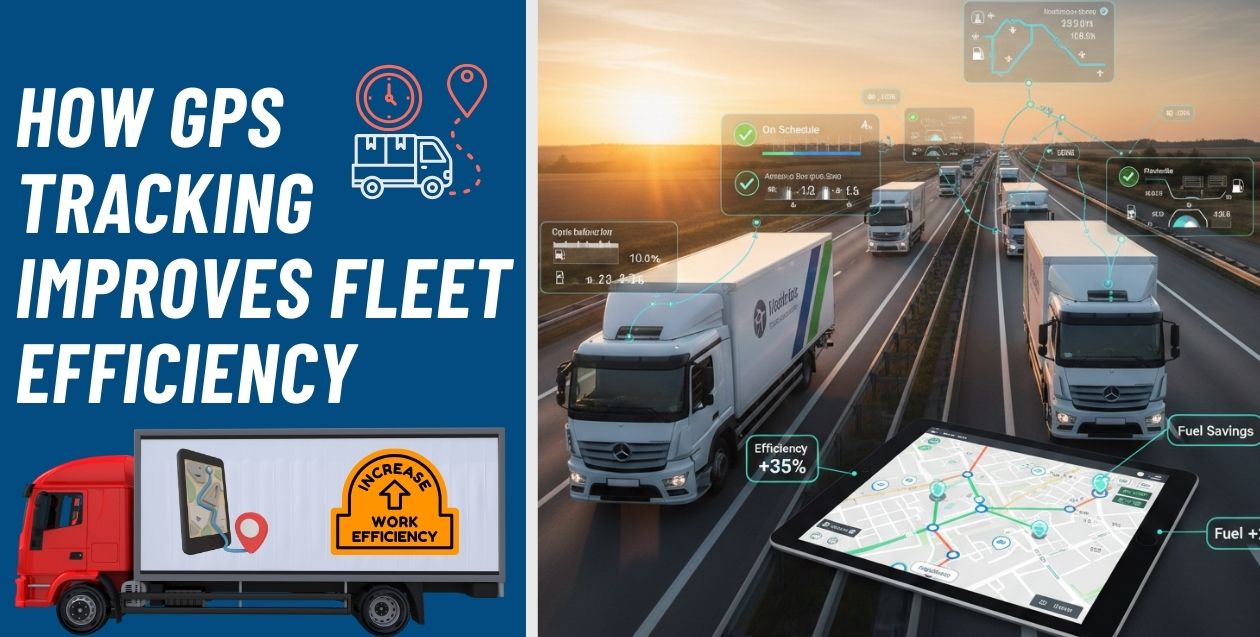
Fleet Efficiency is now seen as a business requirement, in the ever-evolving logistics and transportation sector GPS Fleet Tracking offers fleet operators an efficient way to increase fleet efficiency.
As Fleet Operators continue to face challenges associated with rising fuel costs, increased scrutiny on delivery timelines, as well as increased customer expectations for speedy deliveries and government compliance pressures, it is essential for Fleet Operators to implement higher levels of sophistication through technology.
GPS Fleet Tracking provides fleet managers with a real-time view of the locations, movements and performances of their fleet vehicles, so that fleet managers can make informed decisions based on data to improve their fleet’s productivity; minimize their costs; and, maximize their control over their operations. There’s a comprehensive breakdown of how GPS Fleet Tracking is changing fleet efficiency in multiple ways.
GPS Fleet Tracking is the use of GPS technology and telematics to monitor fleet vehicles in real-time. GPS Fleet Tracking utilizes Global Positioning System (GPS) technology in conjunction with telematics software, to obtain situational awareness of Fleet Vehicles in real-time. GPS Fleet Tracking uses GPS devices installed in vehicles to continuously provide Fleet Managers with information such as: Location, speed, route history, fuel usage, engine data & driver behaviour.
All of this information is transmitted from the GPS devices to a centralized platform that fleet managers can access through dashboards/reports.
With continual access to actionable data via the GPS Fleet Tracking System, organizations are able to transition from a reactive fleet management methodology to a proactive and predictive fleet management methodology.
Using GPS for real-time visibility and control over fleet vehicles allows fleet managers to see where any vehicle is located immediately, how it is moving and if it is on schedule. Eliminating wasted time by contacting drivers for status updates allows them to make quicker decisions on how to resolve disruption or delay in the normal route. It also allows for improved coordination and accuracy when dispatching a vehicle to deliver products or services.
Additionally, GPS tracking allows fleet managers to re-route vehicles to avoid delays caused by traffic, accidents or weather conditions. Fleet managers can help ensure that their assets are being used most efficiently by optimizing than ever.
Fuel is typically the most significant operating expense for any fleet. GPS Tracking systems will reduce the total amount of fuel consumed and overall operating costs by utilizing route data and driving habit analysis. Examples of the efficiency benefits that will be realized with the use of GPS tracking are:
Using GPS tracking allows businesses to reduce their total fuel expense by minimizing the amount of time drivers spend driving unnecessarily. As a result of minimizing travel time and eliminating excess fuel wasted through idling and detours, businesses may also increase the number of trips that can be completely taken with each vehicle.
With GPS tracking capable of producing accurate measurements of distance traveled for route optimization purposes (location to destination), multi-stop delivery operations may be planned more effectively using this technology.
Vehicle downtime is a common occurrence that can lead to unnecessary costs and lost revenue for an organization, so it’s important to be aware of the factors that contribute to it.
The ability to predict when a bounce-back effect will occur is a big benefit of having a strong GPS tracking system installed; using predictive maintenance techniques, you can properly manage the maintenance cycle of your vehicles based on actual use rather than keeping your vehicles on maintenance cycles based on the manufacturer’s specifications or how many miles have been driven since the last location.
There is nothing worse than a broken-down vehicle sitting on the side of the road waiting for repairs to be made.
A GPS tracking system can provide a wealth of information about the performance of your drivers, including GPS coordinates of where a driver is driving, speed while driving, rate of acceleration while driving, likelihood of being in a crash, etc.
Not only can this information help improve the safety and reliability of your fleet but, by identifying which drivers are performing and which drivers need training & development, you can help to minimize costs associated with downtime due to accidents and equipment failures.
Additionally, the GPS tracking for fleet will enhance your vehicle’s ability to detect & resolve problems with a vehicle’s electronic components before they present an issue.
In conclusion, a robust GPS tracking system will add value to your organization by helping to improve your organization’s overall operating efficiency. This level of operational precision directly improves service reliability and customer satisfaction.
Fleet operations are subject to multiple regulatory requirements, including driver working hours, route compliance, and fuel usage reporting. GPS tracking automates data collection and reporting.
By simplifying compliance management, businesses save time and focus more on core operations.
Strategic Advantages:
Continued access to reliable data and monitoring will allow for the best possible continuation of the company’s operational efficiencies and growth scenarios for the fleet.
GPS Tracking has evolved from a ‘Simple Tool for Locating a Vehicle’ to a complete Fleet Management Solution. With improved visibility; improved vehicle routing; driver performance monitoring; predictive maintenance; and data driven analysis, GPS tracking has increased fleet routing efficiency at every level of operation. Organizations can lower their operational costs, cost per vehicle or trip, and thereby have greater control over their fleets through the use of GPS tracking data.

test