

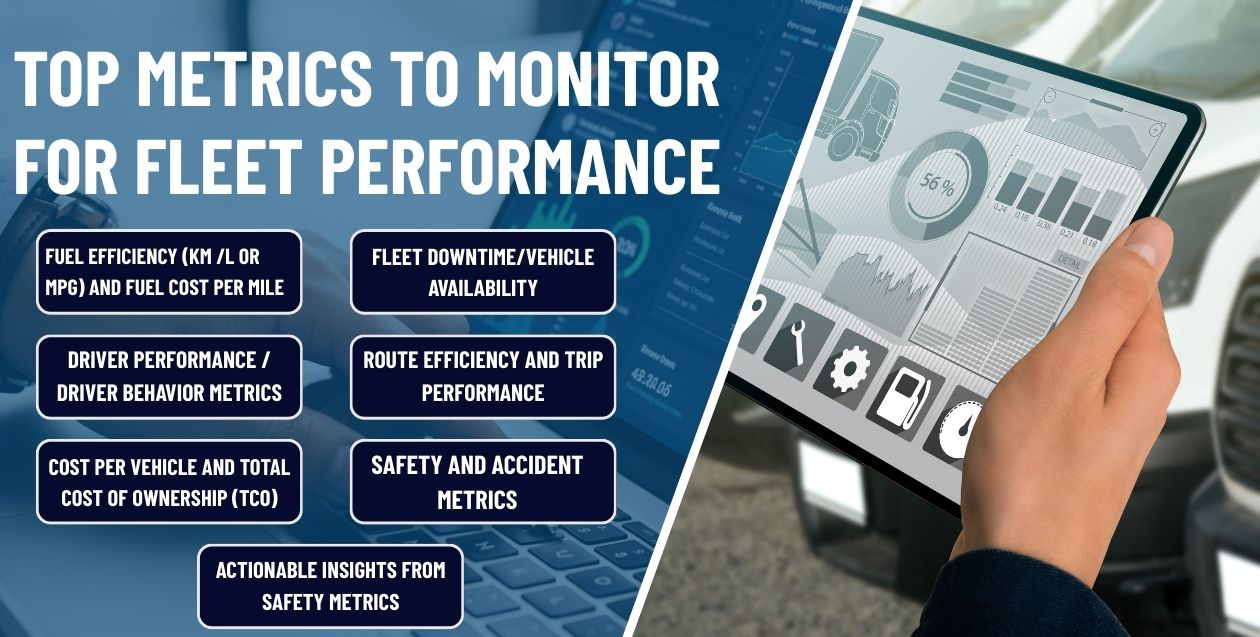
As the logistics industry is becoming extremely competitive with large retailers now competing against smaller retailers, Fleet Performance will not only be measured by on time shipping but by all relevant metrics that enable fleet managers to reduce costs, manage safety and optimizing the Vehicle use so that Fleet Managers can take full advantage of the Fleet performance metrics and shift their Fleet Management System from reactive to proactive optimization.
Fleet Managers will always need to monitor the following Fleet performance Metrics.
Fuel is and has always been one of the largest variable costs associated with operating a Fleet, Fuel efficiency monitoring enables Fleet’s to recognize areas in which Fuel is being wasted, misused and inefficiently used.
Key Performance Indicators to monitor:
Poor Fuel Efficiency indicates either aggressive driving behaviours, long periods of vehicle idling, poorly planned Routing or lack of proper vehicle maintenance. Improving Fuel Efficiency will improve profitability and reduce carbon emissions.
Low utilization suggests excess fleet size, poor scheduling, or idle assets. High utilization, on the other hand, helps justify capital investments and reduces cost per vehicle.
The expense of keeping a car in good working condition is one of the largest contributors to the total cost of ownership (TCO) of the vehicle, and tracking these costs aids fleet managers in planning for scheduled versus actual expenses and keeping cars on the road longer.
A fleet manager can gauge the fleet’s overall maintenance costs compared with how many miles each vehicle is driven with the following metrics:
* Comparison of preventive maintenance expenses versus corrective maintenance expenses
* Cost of maintenance per kilometer/mile
* Vehicle down time related to maintenance
Fleet Downtime provides a measure of how long a fleet of vehicles are not available for use due to maintenance and/or mechanical breakdowns. It also gives fleet managers an idea of how many vehicles are down at any time, enabling them to plan for the need for additional vehicles when necessary. Downtime should be monitored based on the hours of downtime for each vehicle, the fleet’s percentage of vehicles down at any time, and average turnover for repairs, to assist in improving predictive maintenance planning and allocation of spare vehicles.
Driver actions affect the efficiency of the fleet, the safety of other drivers on the road, and the costs associated with operating the fleet. Examples of metrics related to driver behavior include speeding, aggressive driving (harsh acceleration/braking), idle time, and compliance with Hours of Service regulations.
Driver performance metrics allow fleet managers to create targeted training programs and allow for successful implementation of incentive pay and compliance management.
Route optimization is essential for reducing fuel usage and delivery time.
Inefficient routes increase fuel costs and delay deliveries. Monitoring route performance helps refine planning, avoid congestion, and improve customer satisfaction.
Understanding the full cost of operating each vehicle provides clarity on profitability and asset strategy.
Tracking cost per vehicle allows managers to compare vehicle types, identify underperforming assets, and make informed replacement or leasing decisions.
Fleet safety has both financial and reputational implications:
Vehicle accidents expose companies to risk through damages, legal claims, increased insurance rates and delays in operations. Measuring accidents, near-misses and costs associated with accidents can create a data-driven safety culture and reduce overall risks associated with fleet operations.
Having the metrics alone does not provide fleets with the ability to act upon them – successful fleets utilize advanced analytics, telematics and dash-boards to provide a foundational understanding of each fleet’s performance by:
Utilizing Performance Reviews and Data-Driven Decision-Making Processes allow Fleet Managers to Create Measurable Operational Improvements based on the Information Captured through these Tools.
Measuring fleet performance is critical to the control of fleet operating costs, improvement of fleet safety, maximization of fleet assets utilization and to achieve operational excellence.
Fleet management software will have a clear and comprehensive understanding of fleet performance when focused on fuel efficiency, utilization, maintenance, driver behaviour, safety and sustainability. Using fleet performance metrics allows fleet managers to make the most informed strategic decisions.
Furthermore, a structured approach to fleet performance measurement not only improves daily operations but creates a solid foundation for continued growth and scaling of the fleet.

test