

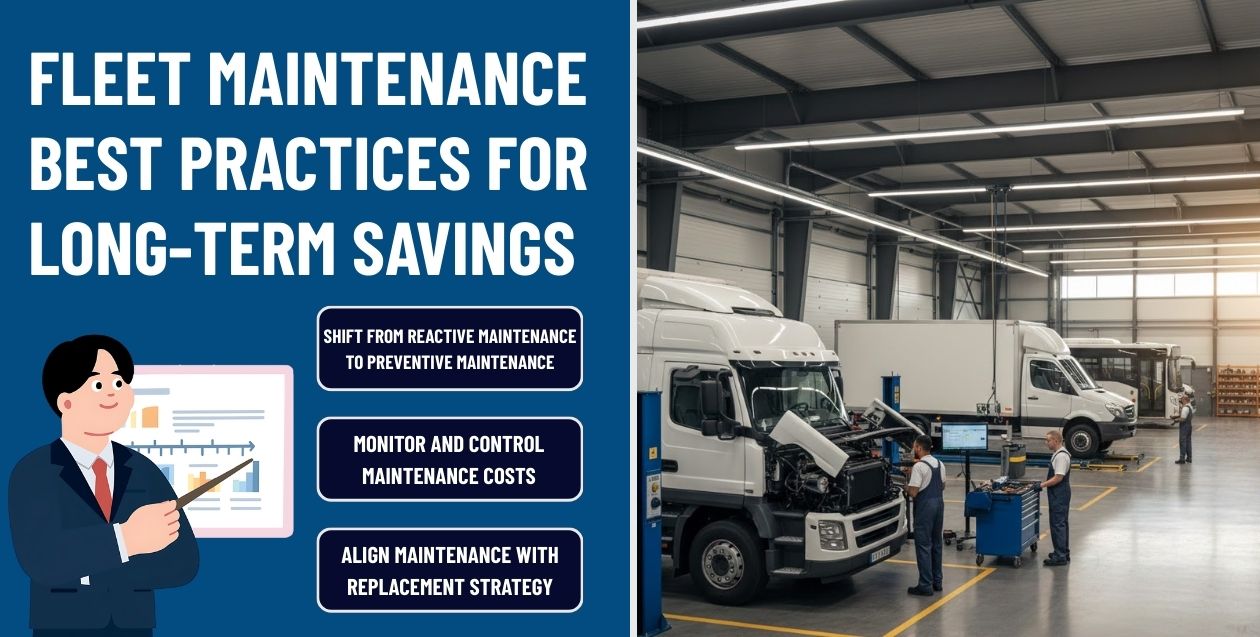
Fleet maintenance is not only an operational matter, but it can also be used strategically to control fleet expenditures over time, as well as provide maximum use from assets in the fleet. Organizations using a structured, data-driven fleet management model/business plan have demonstrated that using proven best practice methodology achieves lower total cost of ownership (TCO) for vehicles, and are able to maximize their use of fleet assets through improved vehicle uptime and longer use of fleet assets.
Alternatively, organizations utilizing a reactive or ‘as-needed’ type of vehicle maintenance methodology tend to experience a higher frequency of escalating maintenance expenditures, along with an increase in the number of vehicle breakdowns they have and often experience the premature replacement of their vehicles.
Let’s discuss several best practices that have been proven, through study and application in various industries, to allow organizations to maximize savings while ensuring vehicle maintenance is compliant and meets safety requirements, and while allowing the organization to continue to be operationally efficient.
The most significant contributor to fleet-related costs for any organization is unplanned vehicle failure or unanticipated breakdown. Organizations using reactive methods to repair these failures typically face greater repair costs, as well as higher expenses for emergency service repair calls, plus the loss of productivity and funds due to the inability to use vehicles after a breakdown.
Best Practice: Use preventive maintenance (PM) to build a maintenance schedule by following vehicle manufacturer recommendations and based on usage in real-time.
Examples of Key Actions to Include in PM:
By incorporating within your organization’s maintenance program the use of preventive maintenance you can eliminate catastrophic vehicle failures, improve the life of your components and allow for the maximization of peak vehicle efficiencies.
Telematics is a way of collecting information using sensors placed on the vehicles. This information is sent via the Internet to a central location where it can be analyzed and stored for future use. It also allows real-time tracking of vehicles and can provide the following:
Benefits include the ability to:
Best Practise: Accurate records also support resale value by demonstrating a well-maintained fleet history.
Driver behavior has a direct and often underestimated impact on maintenance costs. Aggressive driving, poor inspection habits, and delayed issue reporting accelerate wear and tear.
Best practice: Educate drivers as frontline maintenance partners.
Key focus areas:
Well-trained drivers help prevent minor issues from becoming major repairs, contributing significantly to long-term savings.
Without detailed cost visibility, it is difficult to identify inefficiencies or justify optimization initiatives.
Best practice: Track maintenance costs at a granular level.
Important metrics include:
Regular analysis helps identify underperforming vehicles, optimize replacement cycles, and eliminate wasteful spending.
Maintenance outsourcing can be cost-effective, but only when vendor relationships are actively managed.
Best practice: Establish preferred vendor networks with clear performance standards.
Key considerations:
Periodic vendor performance reviews ensure consistent service quality and cost control.
Over-maintaining aging via vehicle management system use can be as costly as neglecting maintenance altogether.
Best practice: Use maintenance data to inform replacement decisions.
Indicators that replacement may be more economical include:
Replacing vehicles at the optimal point minimizes lifecycle costs and improves overall fleet performance.
Fleet maintenance represents a significant investment in future operational efficiencies and profitability; it is not merely an expense to reduce arbitrarily. Organizations adopting data-driven methodologies, preventive actions and standardized practices to perform fleet maintenance will lower fleet costs while also increasing reliability, safety and longevity of fleet assets.
Successful fleets take a strategic approach to fleet maintenance by constantly re-evaluating processes, utilizing technology to its greatest advantage, and linking maintenance decisions with organizational operational goals. Many of these best practices will lead to tangible cost savings and a more resilient fleet operation over time.
Preventive maintenance is a planned maintenance approach based on manufacturer guidelines and real-time vehicle usage data. It includes scheduled servicing such as oil changes, brake inspections, tire rotations, and component checks to prevent breakdowns, reduce repair costs, and extend vehicle lifespan.
Structured fleet maintenance reduces unplanned breakdowns, emergency repairs, downtime, and premature vehicle replacement. By improving vehicle uptime, fuel efficiency, and asset longevity, organizations achieve lower total cost of ownership (TCO) over time.
Telematics provides real-time data on vehicle health, performance, and usage through onboard sensors. It enables predictive maintenance, early fault detection, optimized service scheduling, and data-driven purchasing and replacement decisions.
Driver behavior directly affects wear and tear. Practices such as harsh braking, aggressive driving, delayed issue reporting, and poor inspections increase maintenance costs, while trained drivers help prevent minor issues from becoming major repairs.
Key metrics include maintenance cost per vehicle, cost per kilometer/mile, downtime per vehicle, repeat repair rates, labor vs parts costs, and failure frequency. These insights help identify inefficiencies and optimize maintenance strategies.
Replacement becomes more economical when repair costs rise rapidly, downtime increases, fuel efficiency declines, reliability drops, and maintenance frequency escalates. Data-driven analysis helps determine the optimal replacement point to minimize lifecycle costs.

test