

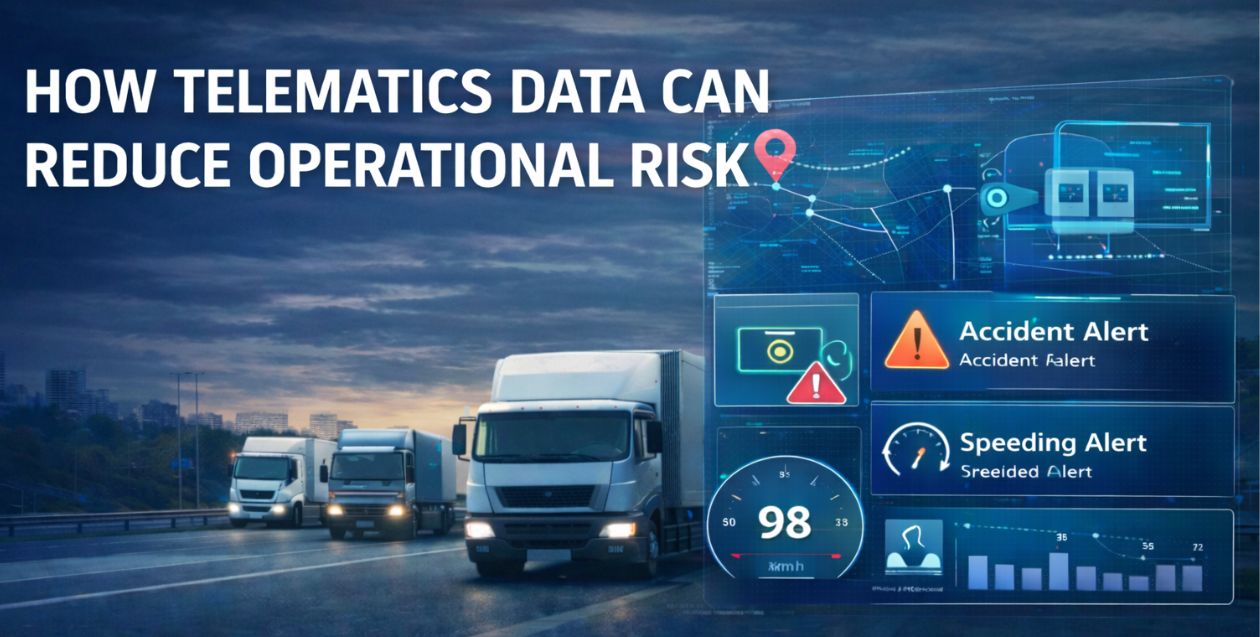
Fleet operators across logistics, marine, construction, and service-based industries rely on complex asset networks that often contain hidden inefficiencies and operational blind spots. These gaps can lead to serious consequences such as accidents, regulatory penalties, unplanned downtime, financial losses, and reputational damage.
Telematics provides solid risk reduction capabilities when used appropriately, and thus represents a considerable opportunity to turn raw vehicle data into actionable intelligence in order to proactively minimize operational risks throughout the enterprise.
Telematics is defined as the real-time and historical collection of data from vehicles, vessels, and mobile assets via GPS, on-board sensors, and IoT devices. This data typically consists of information including location and route history, speed, harsh braking, rapid acceleration, engine diagnostics and fault codes, fuel consumption and idle time, driver behaviour metrics, and maintenance alerts and usage patterns.
By centralizing telematics data in a fleet management solution, organizations that use that solution/platform gain the advantage of greater visibility into their operations and benefit from more accurate evidence-based decision-making.
It is also important to have an understanding of the core categories of risk that fleet operators typically contend with to get an understanding as to how telematics data provides a risk mitigation benefit.
Telematics directly addresses each of these risk vectors.
Unsafe driving is a major contributor to operational losses. By providing metrics such as overspeeding, unwanted braking, aggressive acceleration and excessive idling, telematics systems help fleet managers monitor driving patterns. Fleet managers can use the data obtained from telematics, along with metrics such as driver scorecards and real-time alerts, to identify high-risk drivers and develop targeted training programs. Over time this leads to fewer accidents, fewer insurance claims, reduced liability, and ultimately allows for safer roadways and waterways.
Unplanned breakdowns disrupt operations, lead to missed SLAs(Service Level Agreement), and increase emergency repair costs. Telematics enables predictive maintenance by continuously monitoring engine performance indicators such as oil pressure, temperature, battery health, fault codes, and overall engine condition.
By servicing vehicles and vessels based on actual condition and usage rather than fixed schedules, organizations can significantly reduce unplanned downtime, avoid catastrophic failures, control maintenance costs, and improve safety especially in high-risk marine and industrial environments.
Fleet operations must adhere to stringent regulations covering safety, emissions, working hours and reporting operational data to government agencies. This minimizes the risk of non-compliance penalties and ensures your organization is always audit-ready with verifiable operational data.
Fuel theft, inefficient routing, and unauthorized usage silently erode profitability. Telematics platforms detect anomalies such as fuel level drops inconsistent with distance traveled, route deviations, unauthorized trips or after-hours usage and excessive idling. By eliminating these leakages, organizations can protect margins and reduce exposure to operational fraud and misuse of company assets.
When disruptions occur traffic congestion, weather issues, mechanical faults real-time visibility allows operations teams to react immediately. Telematics enables live rerouting to avoid delays, faster incident response, better coordination between dispatch, drivers, and maintenance and reduced customer impact during disruptions. This resilience significantly lowers operational risk by preventing minor issues from escalating into major service failures.
Telematics data supports strategic risk management by revealing long-term patterns such as high-risk routes, accident-prone zones, maintenance cost trends and underperforming assets. Organizations can use this intelligence to redesign routes, upgrade vehicles, renegotiate insurance premiums, and improve safety policies systematically lowering risk exposure year over year.
Marine fleet telematics is an important tool used to prevent risk in marine fleet management by allowing fleet managers to rapidly obtain vessel location, engine condition, fuel efficiency, and the behavior of crew members while they operate their vessels; therefore, allowing fleet managers to avoid mechanical failures while at sea, fulfill government regulatory requirements, reduce unnecessary fuel costs, and enhance safety in the high-risk environments that many vessels operate in. While telematics is fundamental for marine fleets and marine logistics, telematics are essential to meeting operational risk management objectives for marine asset owners and operators today.
Manaviya Tech CANBUS Telematics plays a critical role in operational risk mitigation by providing deep, vehicle-level intelligence directly from the CANBUS network. Unlike basic GPS tracking, CANBUS telematics enables access to high-resolution engine and performance data, allowing fleet operators to detect risks before they escalate into costly incidents.
By capturing real-time parameters such as engine RPM, coolant temperature, fuel consumption, fault codes, battery health, throttle position, and driver behavior metrics, Manaviya Tech’s CANBUS-enabled solution empowers fleet managers with accurate, actionable insights. This data supports proactive driver monitoring, predictive maintenance, and early fault detection significantly reducing accident risk, mechanical failures, and unplanned downtime.
Telematics data used for operational risk mitigation will no longer be viewed as a luxury; it is critical to today’s operational risk management process. The effective use of telematics when integrated with a robust fleet management system improves the safety of operators, decreases the probability of their operations suffering from a breakdown (mechanical or structural), increases their ability to comply with regulatory requirements, protects their financial returns, and provides real-time operational oversight to fleet and marine logistics operators while reducing their exposure to operational risk.
Furthermore, the effective utilization of telematics data will separate the best performing fleet operators and manufacturers from the rest of the industry with respect to their effectiveness at turning operational data into operational resiliency in the decade following 2026.

test