

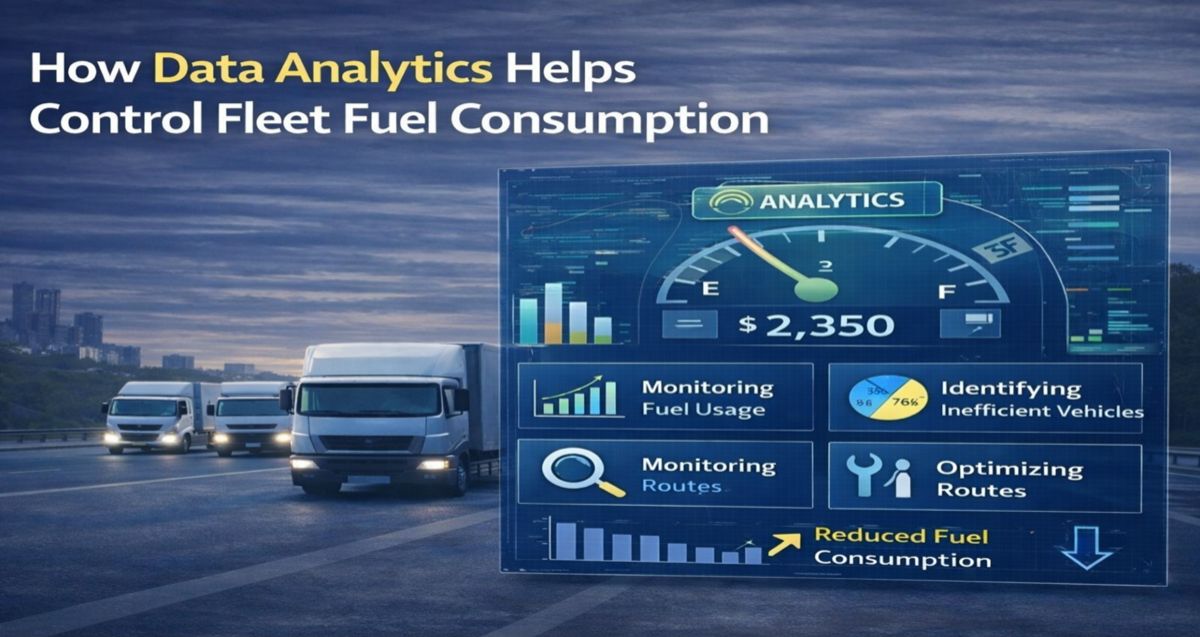
Rising fuel consumption and volatile fuel costs remain a pressing ordeal for fleet operations. With fuel making up a large share of operating costs, managing fuel spend has become a critical priority for transport businesses.
Data analytics can provide you the clarity you need to optimize your fleet fuel consumption. With smart analytics measuring vehicle performance, routes, and time periods, you can gain visibility into your fleet operations while securing your revenue.
On an average, fuel costs make up about 25% to 40% of total fleet operating expenses, but that’s not the only challenge. Fuel prices rarely stay stable. Even minor spikes can quickly inflate operating costs and squeeze fleet margins.
Operational inefficiencies can exacerbate this issue. Factors such as inefficient routes, excessive idling, poor driving habits, and unexpected traffic conditions often lead to unnecessary fuel consumption, resulting in added fuel costs.
If fuel consumption of your fleet goes unmonitored, you may continue to experience these issues. Without proper fleet monitoring systems in place, your businesses may struggle to track fuel usage accurately or pinpoint where wastage is occurring.
So, when problems like fuel theft, questionable driving patterns, or route inefficiencies go unnoticed, it’s harder for your logistics team to keep fuel expenses under control.
Every day, fleet operations add huge chunks of data —- including each trip, each route, and each re-fuelling session of your vehicles. Since these factors directly influence your fuel consumption, analyzing them properly can help you learn how your fleet operates and where improvements are needed.
This data is pulled by GPS tracking devices, telematics systems, fuel sensors, and displayed coherently on a fuel management software. Details like vehicle location, routes taken, driving patterns, and fuel usage, are collated on a centralized dashboard wherein you can monitor fleet activity in real time.
When you have data handy, you can detect what’s causing fuel dips. Whether it’s inefficient routes, vehicle performance, or unusual usage, managing fuel costs becomes less strenuous and more organized with a robust data analytics system in place.
The ideal fuel management system makes sure that nothing slips through the cracks. It empowers your logistics teams to access accurate insights and make strategic decisions impacting maintenance, compliance, and day-to-day operations.
Here are some advantages that a fuel management system delivers:
With real-time fuel monitoring on your side, you can track fuel consumption across different vehicles and promptly respond to any anomalies or unusual usage patterns. These could be due to fuel theft, possible leakage, traffic congestion, or unauthorized trips. This level of visibility can help you maintain tighter control over fuel expenses and keep your fleet operations leaner.
Driver behaviour is one of the key determinants in fuel consumption. Patterns such as speeding, harsh acceleration, excessive braking, and prolonged idling can all be taken into account and revealed by fleet analytics tools, resulting in more sensible consumption of fuel. This can also reinforce accountability in drivers and improve overall fleet performance.
As a transportation business, determining the most fuel-efficient routes for your vehicles will play out in your favour by lowering your fuel bills. You can analyze route data and traffic patterns so that drivers can avoid congestion, minimize unnecessary detours, and reduce total travel distance. Over time, optimized route planning helps lower fuel consumption while improving delivery timelines, resulting in higher customer satisfaction.
Fleet downtime can compromise your operations and cost you revenue. A study reveals that around 31% of fleets report excessive downtime due to emergency breakdown, arising from unscheduled maintenance.
The first step is to look out for poorly maintained engines, underinflated tires, or delayed servicing as they can lead to higher fuel consumption. With an adaptive fuel monitoring system, your teams can easily know the performance of your vehicles and schedule preventive maintenance to keep operations running uninterrupted.
Identifying each vehicle’s performance can inform you if any particular vehicle is consuming excessive fuel, and why. Accordingly, you can come up with solutions related to maintenance, upgrades, or replacements. With transparent insights, you can optimize your fleet’s fuel utilization and improve profit margins while supporting sustainable fleet operations.
Fleet management should be proactive, and not reactive. With rising fuel costs, operational inefficiencies, and unpredictable road conditions, having complete visibility and control over how fuel is consumed equips you with timed, thought-out action.
Manaviya TechCalcomm is an adaptive fuel management software that addresses fuel consumption challenges by combining automation with advanced analytics. With our integrated platform, you can track fuel consumption patterns, monitor vehicle performance, and identify inefficiencies in real time. In a few clicks, you can detect culprits in higher fuel consumption, such as unnecessary detours, excessive idling, or poor driving habits.
Ready to balance your fuel spend and better control over your logistics operations? Get a free quote on our smart fleet management software.

test