



One of the largest obstacles businesses face in operating fleets is the management of fuel consumption. This, coupled with manual tracking of fuel, fuel theft, improper fuel usage, and incorrect data greatly increases the complexity of operating a vehicle fleet and causes significant losses. Fleet owners can utilize our RFID Fuel Management System as a smart, automated, and tamper-proof system that provides them with the ability to effectively manage, monitor, and optimize the use of fuel in real-time.

Automated Fuel Dispensing
RFID technology automates fuel dispensing, making the process faster and more reliable while minimizing human intervention.
Real-Time Fuel Tracking
The system provides real-time tracking of fuel usage, helping monitor consumption and identify inefficiencies instantly.
Enhanced Security and Accuracy
RFID automation reduces manual errors and unauthorized fuel access, ensuring accurate fuel management for various industries.

The RFID system implemented at aims to streamline and enhance the security of fuel distribution, ensuring diesel is dispensed exclusively to authorized personnel and vehicles. This solution combines hardware components, including RFID readers and controllers, with a comprehensive software platform accessible via mobile devices.
Key Objectives
Each vehicle within the fleet is fitted with IoT sensors, which are essential for identifying and authenticating the vehicle during refueling. The system captures the unique RFID tag of each vehicle along with corresponding fuel tank level information.
RFID controllers are installed on fuel dispensing units, including bowsers (mobile fuel trucks) and stationary pumps. These controllers interact with the vehicle sensors during refueling to ensure that only authorized vehicles receive fuel and that the dispensed quantity complies with approved limits.
A convenient mobile application links authorized personnel to the fuel management system. This app serves as a key interface, offering real-time information and enabling fuel request submissions.
An embedded approval process requires designated authorities to review and authorize fuel requests prior to dispensing. This mechanism provides an essential layer of control to prevent improper use.

One of the mobile app’s key features is its capability to show the vehicle’s current fuel level. By utilizing real-time data from RFID sensors, users can accurately view the remaining diesel in the tank prior to making a request.

To enhance operational efficiency and reduce waste, the app limits users from requesting diesel quantities exceeding the tank’s capacity. This safeguard helps prevent issues such as spillage, overcharging, or fraudulent activities.

The system incorporates an approval workflow that promotes accountability and transparency, allowing every request to be tracked back to the responsible parties.

Equipping both bowsers and pumps with RFID controllers enables refueling across various points within the site, providing greater operational adaptability and reducing downtime.

Each fueling event is securely logged and associated with specific vehicle and personnel identities, lowering the chances of unauthorized fuel usage and facilitating easier audits.

IoT sensors installed in each vehicle continuously track and transmit real-time data regarding the fuel level. This information is synchronized with the mobile application, enabling users to monitor the exact diesel quantity available in the tank at any given moment.

The requestor, usually from the operation team, accesses the mobile application. The app immediately displays the current diesel level in the vehicle’s tank. Based on operational demands, the requestor specifies the required diesel amount. The system enforces limits to prevent requests exceeding the tank’s capacity, thereby avoiding overfilling and potential misuse. The fuel request is submitted via the app and recorded in the central database.

The submitted request is forwarded to authorized personnel for evaluation. The approver assesses the request in line with operational needs and organizational policies. Once approved, the system updates the records accordingly and notifies the fueller.

The vehicle moves to the bowser or pump for refueling. RFID controllers verify the vehicle’s identity by scanning its RFID tag. Upon confirming the vehicle and approved request match, fuel is delivered from the bowser (mobile fuel truck) or pump, up to the authorized amount. The system records the transaction, updating the vehicle’s fuel status and inventory levels in real time.

Detailed records are kept, including:
This information is accessible for reporting, auditing, and analysis, facilitating improved resource management and regulatory compliance.

Currently, all inward entries are recorded manually, which can lead to errors when entries are missed, resulting in negative values during reconciliation. Implementing ATG will automate inward data collection, thereby improving system accuracy.

Although a breakdown feature exists, it is currently underutilized. This function can be employed to mark vehicle breakdowns, disable the vehicle’s RFID tag, prevent fuel dispensing, and track vehicle downtime.
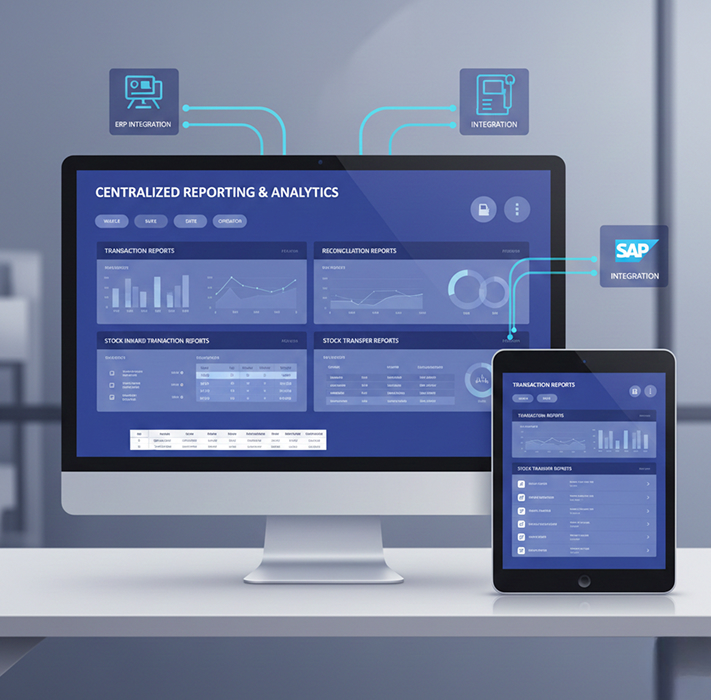
Admins can generate reports by vehicle, date, operator, etc. Optional ERP and SAP integration is available.
Available reports include:
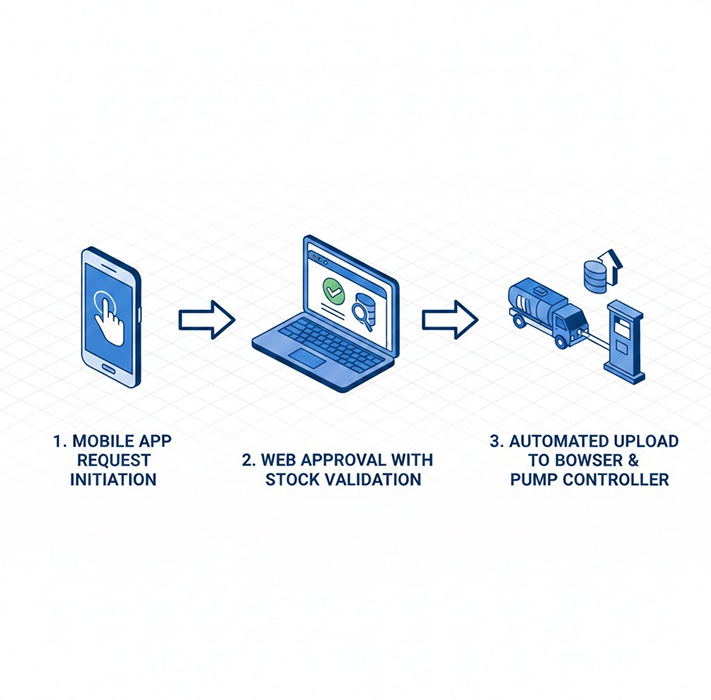
Step 1: The requester initiates a fuel filling request for machinery based on requirements using the Callcomm Prudent mobile application.
Step 2: The approver logs into the web application and approves, modifies, or rejects the request based on stock availability. Once approved, the request is automatically uploaded to the controller installed in the bowser and pump.
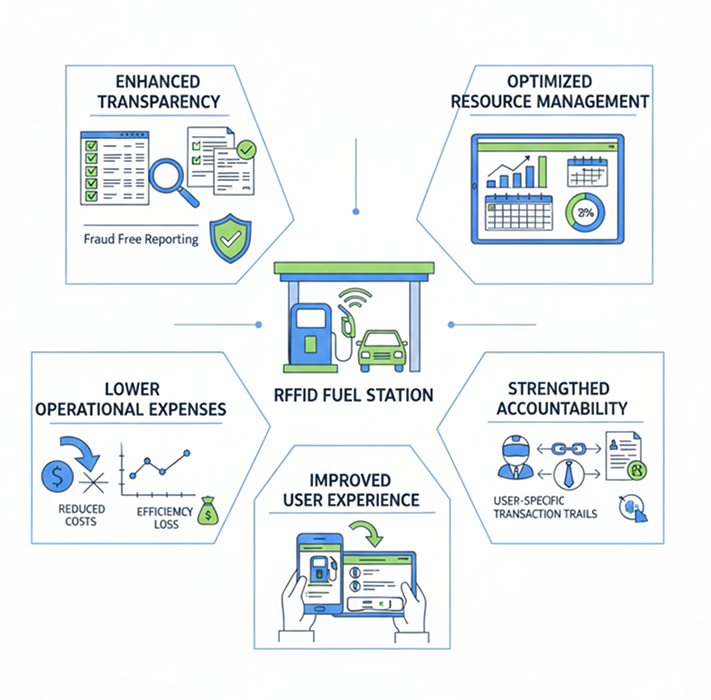
Improved user experience: Both drivers and supervisors benefit from a simplified and efficient process.







All transactions are recorded, minimizing the risk of fraud and inaccurate reporting.

Real-time data enables more effective planning and allocation of resources.

The system reduces manual errors, fuel theft, and delays in operations.

Detailed digital records clearly assign responsibility for every request and transaction.

Both drivers and supervisors benefit from a simplified and efficient process.
The system uses RFID tags installed in vehicles and RFID controllers on bowsers and pumps to authenticate vehicles before dispensing fuel. Only vehicles with approved fuel requests and valid RFID identification can receive fuel, effectively preventing unauthorized access and fuel theft.
Yes. IoT fuel sensors installed in vehicles continuously monitor and transmit real-time fuel level data. This information is visible through the mobile application, allowing accurate monitoring of fuel consumption at all times.
Fuel requests are initiated through the mobile application and routed through an integrated approval workflow. Designated authorities review and approve requests before dispensing, ensuring compliance with operational policies and preventing misuse.
Yes. Manviya Tech’s RFID FMS supports refueling through both mobile bowsers and fixed fuel pumps. RFID controllers installed at each dispensing point ensure consistent authorization, flexibility, and uninterrupted operations.
The system automatically logs detailed information including vehicle ID, requester and approver details, fuel quantities requested and dispensed, timestamps, and refueling location. These records support audits, compliance, and data-driven decision-making.
By automating fuel requests, approvals, and dispensing, the system minimizes manual errors, reduces paperwork, eliminates fuel theft, and provides real-time insights into fuel usage—resulting in lower operational costs and improved efficiency.
No longer manually fuel logs or take guesses on how much fuel is being consumed daily; track, manage, and optimize every drop you use!

