

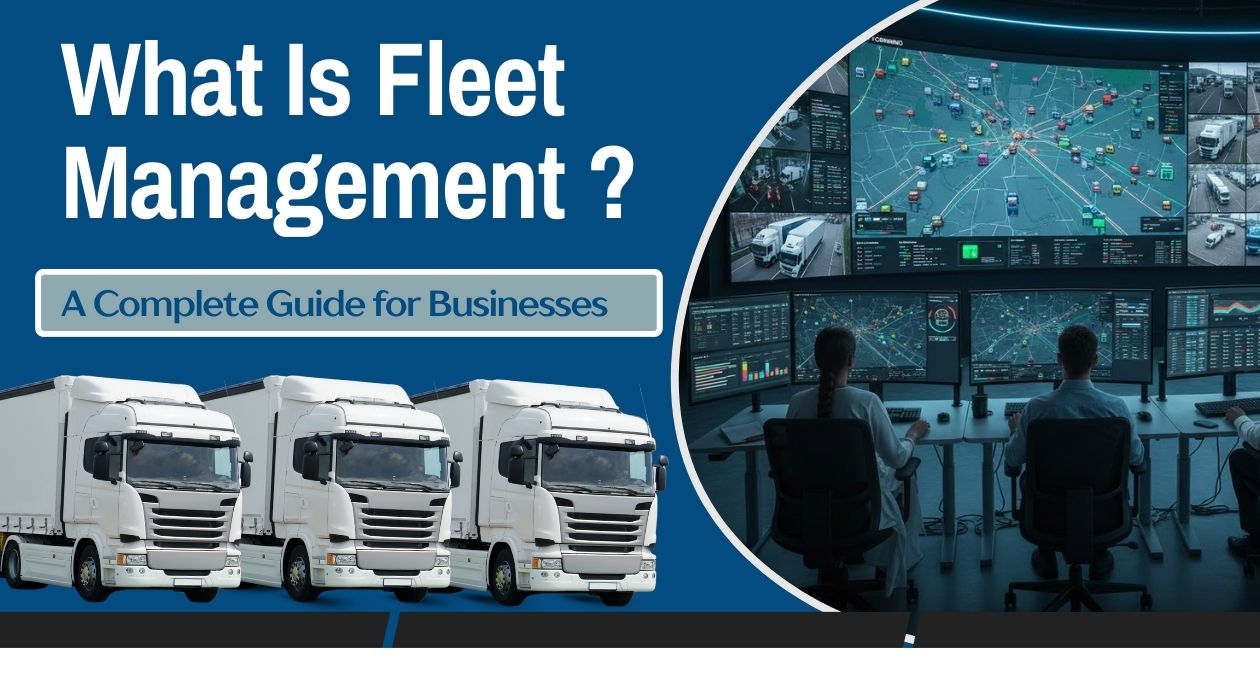
In today’s fast-paced, cost-driven business world, there are many operationally successful businesses that are managing their vehicles regularly. Whether it is a business that uses delivery vans, service vehicles, trucks or company cars, fleet management has an important role in managing costs; increasing productivity; and ensuring safety. In this blog about fleet management, we will cover what fleet management includes, how it works and its importance in all the levels of business.
Fleet Management is defined as the act of managing, monitoring and maintaining an organization’s vehicle fleet to ensure performance, alignment, safety and cost-effective operations. Fleet Management includes processes, systems, tools, and techniques for the management of a fleet of vehicles, drivers, fuel, maintenance schedules, and regulatory compliance.
Fleet Management can be applied to many different industries including but not limited to: logistics, transportation, construction, mining, utilities, and field services.
Fleet Management systems use GPS technology to track and monitor the vehicle’s location, route, speed, and time spent idling in order to assist the business in planning routes more efficiently and eliminating wasted travel time.
Fleet management helps businesses track how much fuel is used by their fleets, and also helps them identify fuel thefts, minimize fuel wastage, and improve vehicle mileage by motivating better driver behaviour.
By consistently maintaining and repairing a vehicle, fleet managers can prevent breakdowns from occurring, thus extending the vehicle’s lifespan. Fleet management systems permit fleet managers to schedule preventative maintenance regimens, keep a history of repairs, and notify them when to perform repairs.
Fleet managers track the behaviour of their drivers with regard to unsafe driving practices such as harsh braking, overspeeding, and excessive idling. Monitoring driver behaviour enhances the driver’s safety, decreases accidents, and decreases insurance premiums.
Fleet management allows businesses to remain compliant with all federal, state, and local regulations, permits, insurance renewals, emissions controls, and safety standards; thus preventing costly penalties and litigation.
Advanced fleet management systems provide a variety of reporting tools which allow fleet managers to analyze fuel consumption, vehicle performance, driver performance, and operational costs, thereby enabling data-driven decision-making.
Fleet management is beneficial for those businesses that have fleets or use vehicles, including:
Also, small companies with a small number of vehicles would benefit from using fleet management systems.
Modern Fleet Management relies heavily on fleet management software, which when using digital fleet management software combines fleet management software with other forms of technology, such as GPS tracking, Fuel Management, and Vehicle Maintenance Alerts.
Digital Fleet Management Solutions provide a way to automate fleet operations and reduce manual errors; provide a way for companies to gain real-time access to their fleet operations.
Fleet management has evolved and is no longer simply about knowing where vehicles are. Fleet management system is an integral part of the strategy for most businesses that operate with fleets. Utilizing the appropriate Fleet Management Practices and Utilization in Practice will allow businesses to maintain a competitive edge.
If Your Company Relies on Vehicles to Conduct Business, then you Must Invest Time & Resources into Fleet Management as the Future of Your Business.

test