

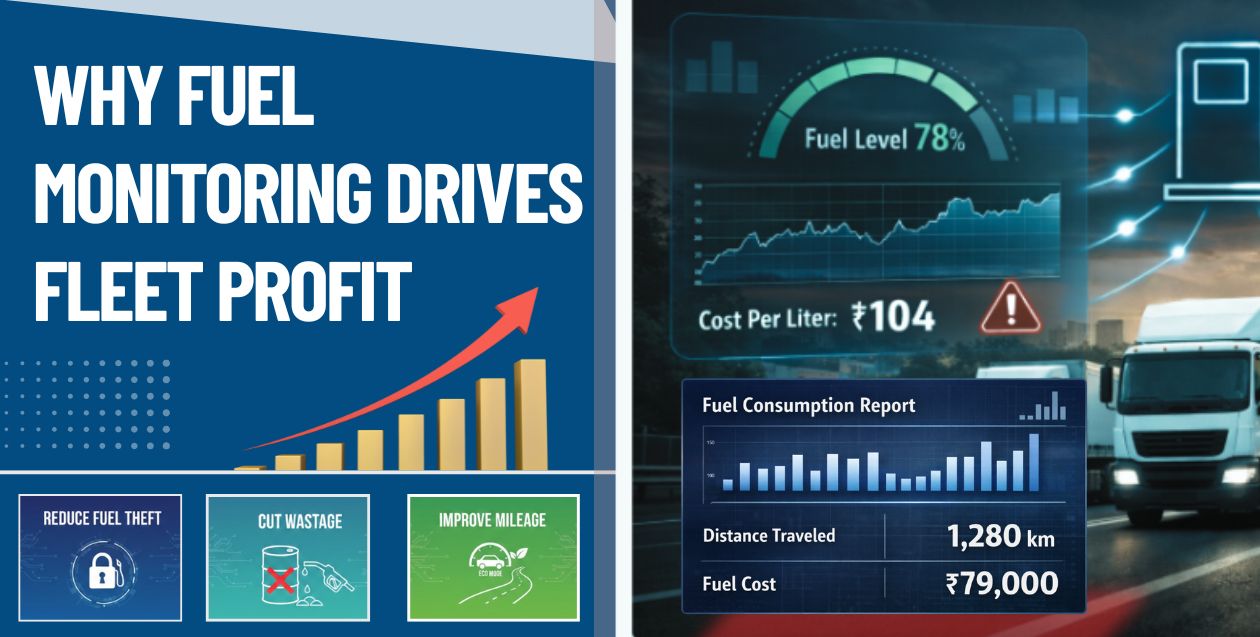
Fuel is one of the most expensive necessities in fleet operations. If you manage logistics, trucks, delivery fleets, construction vehicles or passenger transport, ports, and fuel costs; fuels are always high on the budget if not managed properly.
In a business where profit often depends on tight cost cuts and operational efficiency, fuel monitoring isn’t just helpful; it’s quintessential.
Let’s break down the how & why.
For most fleet businesses, fuel accounts for a majority part of the total operating cost. Even a small percentage of fuel wastage can mean financial losses.
Without proper monitoring fuel theft may go unnoticed and vehicles may consume more fuel due to poor driving behavior. It can lead to inefficient routes that may increase fuel usage and idle time may silently burn money. Fuel monitoring gives you visibility and visibility leads to control.
Fuel theft is more common than one may think. It can happen through manual siphoning, false fuel receipts, tampering with fuel tanks and misuse of company vehicles.
With fuel monitoring systems and sensors installed, you can track real-time fuel levels, detect sudden drops in fuel, match fuel refills with route data and receive instant alerts for suspicious activity. This alone can save businesses thousands annually.
Driver behavior can directly affect fuel efficiency. Harsh driving, over-speeding, vehicle idling, and poor route choices increase fuel consumption.
Fuel monitoring systems integrated with telematics can help track idling time, help monitor driving patterns, compare fuel efficiency across drivers and identify training opportunities. When drivers know performance is monitored, accountability improves and so does fuel efficiency.
Poor route planning may lead to longer distances, traffic-heavy routes and unnecessary detours. Fuel data combined with GPS tracking allows managers to analyse fuel consumption per route, identify inefficient routes and optimize delivery schedules. Shorter routes mean lower fuel usage and faster deliveries both directly improving profitability.
Vehicle condition plays a major role in fuel efficiency. Issues like under-inflated tires, engine inefficiencies, clogged filters, and poor alignment. These can increase fuel consumption significantly. Fuel monitoring can help detect unusual consumption patterns, which may indicate maintenance issues. Early detection reduces repair costs and prevents long-term damage.
Modern fleet management relies on data. Fuel monitoring provides insights such as cost per kilometer, fuel efficiency trends, vehicle-wise consumption comparison, seasonal fuel usage and more. With this data, fleet owners can replace inefficient vehicles, adjust budgets accurately, improve pricing strategies and forecast fuel expenses more effectively.
If your company uses fuel monitoring from Manaviya Technologies to reduce theft, decrease waste, improve driver performance, optimize routes, and get proper maintenance; there’s an opportunity for you to reduce your overall operating costs. Efficient utilization of fuel can produce an improvement in annual revenue for the total fleet.
Use of fuel will be decreased through the reduction in carbon emissions, promoting an ethical brand image for your business. Today many businesses are required to demonstrate their efforts towards sustainability.
With fuel monitoring you can see how much fuel has been consumed; therefore reducing carbon emissions, supporting sustainable objectives, and enhancing your company’s corporate responsibility image. The owners can increase their profitable business while achieving a more sustainable business model.
Manaviya Tech provides advanced fleet fuel monitoring system designed to give businesses complete visibility and control over fuel usage. With real-time fuel level tracking, theft detection, consumption analytics, and GPS and telematics integration, Manaviya Tech helps fleet operators reduce fuel losses, improve driver accountability, and optimize operational efficiency. By turning raw fuel data into actionable insights, Manaviya Tech enables organizations to cut operating costs, increase profitability, and move toward more sustainable fleet operations.
Fuel monitoring should be part of your operating plans going forward. In this marketplace with tight margins and high operating expenses, fuel consumption control is a very quick and efficient way to increase an organization’s profitability. ‘If you can’t measure it, you can’t manage it’, applies to every aspect of fleet profitability but especially to fuel costs, because these costs continue rising even today.

test